

How the Best Ecommerce Brands Build Community that Converts
If you’re heading up the marketing at a fast-scaling ecommerce brand, “community” is probably one of those words that makes your finance director’s eye twitch. It sounds soft and perhaps a bit empty - like the sort of thing you fund once the growth targets hit, not before.
Community-led growth happens when a brand turns its existing customers into the engine doing the heaviest lifting; lowering acquisition costs, extending customer lifetime, and generating exactly the kind of organic content no media budget could buy outright.
Earlier this year, we pulled together Life Goals, our showcase of the best marketing in the hobbies and pastimes space. When it came to community, there were 4 clear winners. These brands’ community work isn’t just good storytelling. Dryrobe, Gym+Coffee, COROS, and Rapha have all built community into something that behaves like a commercial lever, not just a nice-to-have that doesn’t disrupt the numbers. This article breaks down what they’re doing and why it matters.
Why Community is a Commercial Lever, not a Brand Nicety
Scaling ecommerce brands lives with a particular kind of pressure. Investors want growth, but they also want efficiency, and those two things pull in different directions. Once you’ve captured the easiest customers, every extra one costs more to win, so paid acquisition can’t deliver both forever.
Brand investment is usually the first thing on the chopping block in that conversation, because it’s the hardest to draw a straight line to revenue. Community sits in exactly that danger zone, unless you can show what it’s actually doing.
The four brands highlighted below all treat community as an integral part of their infrastructure. They use it to reduce reliance on paid media, to turn customers into a distribution channel, and to build the kind of retention that a discount code never will. None of that shows up neatly in a last-click report, but all of it shows up on the P&L eventually.
Dryrobe: Earning Credibility instead of Buying It
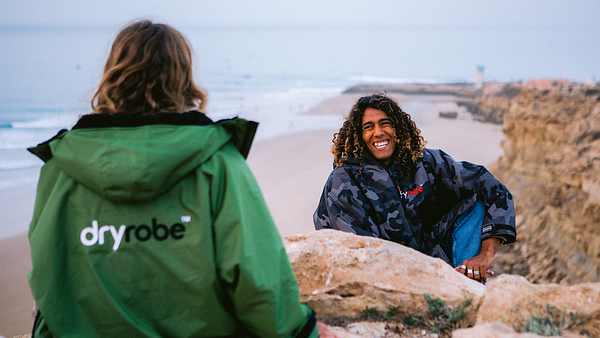
Dryrobe started life as a homemade robe stitched together from towels and waterproof fabric, so its founder could change out of a wetsuit on a cold Devon beach. It’s now the brand known for kitting out Team GB at the last two Olympics.
Growing that far without leaning on a big media budget meant Dryrobe had to find another way to build trust. Instead of pushing product, they partnered with elite athletes and respected outdoor organisations, including Ironman, British Swimming, Red Bull, and the RNLI, to show up in genuinely high-performance environments rather than buy its way into them.
Alongside that, the brand leant into the #DryrobeLife movement: everyday swimmers, dog walkers, and van-lifers sharing their own experiences online. Dryrobe didn’t tell people what it stood for, it let the people already living that life to do the telling.
That loyalty has even survived the internet trying to take the mick. The infamous “DryRobe Wankers” Facebook group, with over 150,000 members exists purely to poke fun at people wearing Dryrobes somewhere other than a beach: the school run, the supermarket, a motorway services car park. Most brands would wince. Dryrobe owners leaned into it instead, with some reclaiming the joke online rather than being embarrassed by it. Once your customers are proud enough to wear the insult, you know the community isn't going anywhere.
The commercial upside is straightforward. Earned credibility is cheaper than bought awareness, and it compounds. Every athlete partnership and every piece of UGC does double duty, building the brand and generating content that would otherwise sit on a paid creative budget.
Gym+Coffee: Turning Customers into the Brand Itself
Gym+Coffee’s “Make Life Richer” Awards does something most brand campaigns don’t: they turn the spotlight away from the brand entirely.
The awards celebrate the trainers, cafe owners, volunteers, and event organisers who make local fitness communities feel welcoming, not star athletes or influencers who are disconnected from the everyday person. Winners are nominated and voted for by the community itself, and the 2024 awards night in Dublin ran on that energy rather than flashy staging.
It’s a clever bit of positioning. Gym+Coffee didn’t try to manufacture community from nothing. It found the community that already existed around movement and belonging, then handed it the microphone.
People rarely walk away from something they feel they helped build. A campaign made entirely of customer nominations creates exactly that sense of ownership, and it does it at close to zero production cost.

COROS: Meeting Your Community Where They Already Are
COROS makes performance wearables for runners, cyclists, and endurance athletes, and its “37 Miles in Two Weeks” Strava Challenge is a masterclass in low-friction community building.
The distance was chosen because it reflects what the average COROS user already runs every fortnight. Rather than investing in a new platform or asking users to do anything unfamiliar, COROS ran the challenge on Strava, where its community already logs every session.
That single decision of meeting people where they already are instead of building somewhere new is why it worked. The challenge drove an 8.7% increase in COROS Strava Club memberships, plus a wave of organic, user-generated content as runners shared their results.
The lesson for anyone weighing up a big community platform build is simple: the highest-converting move is often the smallest one. Go where the behaviour already exists and make it easy for people to bring you along.
Rapha: The Loop that Turns Belonging into Repeat Revenue
Rapha is the clearest example on this list of community functioning as a genuine revenue engine, not just a brand feeling.
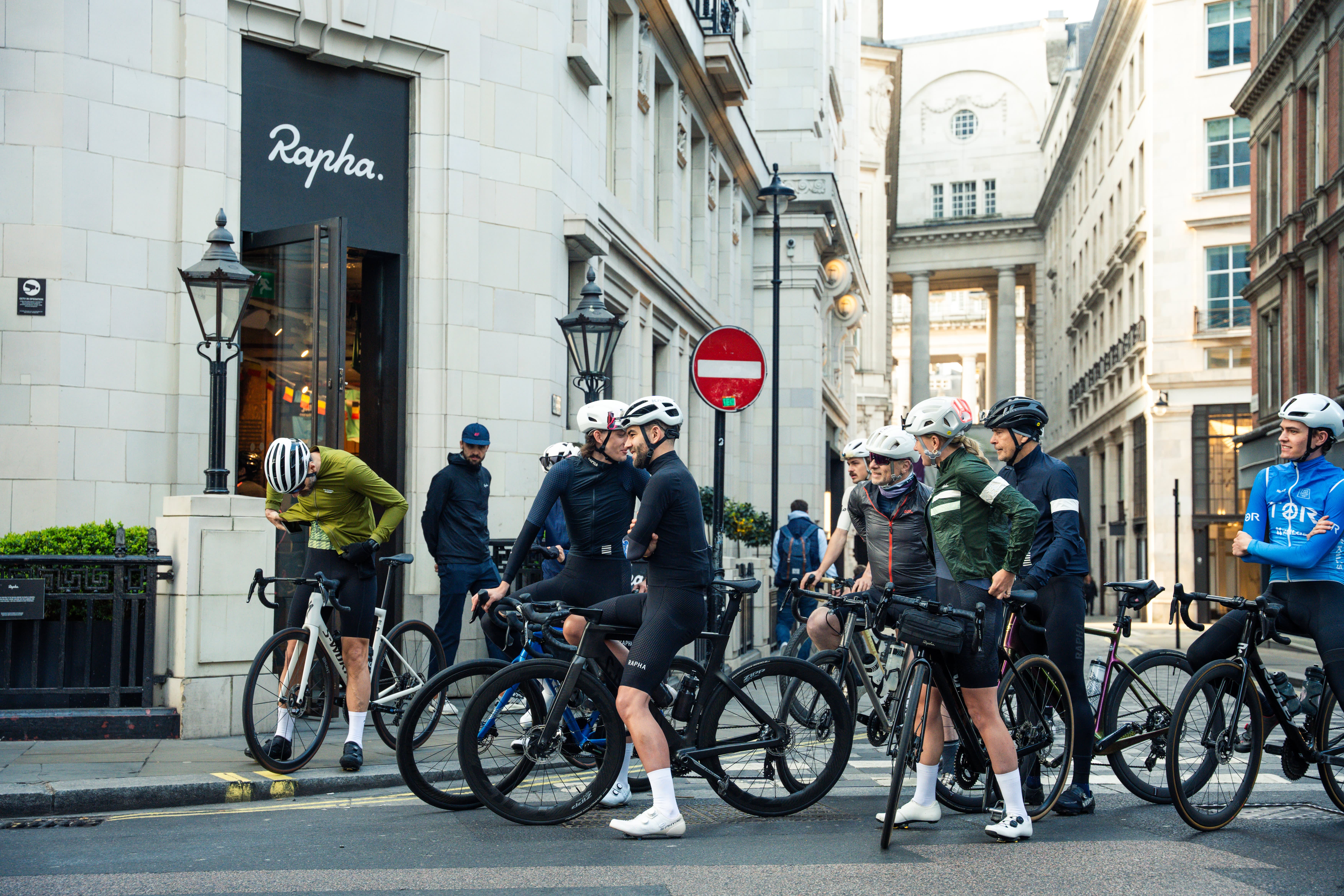
The Rapha Cycling Club connects membership, the Rapha app, physical “Clubhouses”, and ecommerce into a single loop. Members book rides and reserve kit through the app, then use that same membership in-store for free coffee, exclusive drops, and repairs. Digital drives people into physical spaces, and those spaces drive people back to buy.
The result is a community of more than 20,000 RCC members across 80 countries, and DTC sales that continue to grow YoY. Rapha uses data to understand what kind of rider someone is and tailors communication accordingly, but it always frames around shared passion rather than an algorithm doing the talking.
This is the version of community your board will love to see: one with a visible link between belonging and repeat purchase, not just brand sentiment.
What These Four Brands Have in Common
None of these brands treat community as a marketing tactic bolted onto the side of the business. It sits closer to the centre of how they operate.
Each one also resisted the easiest version of “community” - the kind that’s just a hashtag and a WhatsApp group; Dryrobe earned credibility through real partnerships, Gym+Coffee handed ownership to the people already doing the work, COROS met its audience on a platform that already existed, Ralpha built a physical and digital loop that people move through.
They also all know who they're talking to and understand their customer profile, rather than marketing at a generic person and hoping for the best. Dryrobe understands the cold-water swimmer well enough to know the #DryrobeLife community would carry the brand's message better than any ad could. COROS knows its average user well enough to set a Strava challenge at exactly the distance they already run. That's the difference between a demographic and a persona: a demographic tells you who might buy your product, a persona tells you what they'd actually show up for.
The other thread is patience. None of those behaves like a paid campaign with a fixed end date. It’s built to compound, which is exactly why it’s so often underfunded by brands still measuring marketing in last-click terms.
The Strategic Playbook: Building Community that Converts
A few questions worth putting to your own team, based on what these four brands got right.
Are you buying attention or earning it? Dryrobe’s approach only works because the partnerships are genuine, not sponsorship deals dressed up as authenticity. If your “community” activity is really just paid influencer spend, it will behave like a paid media: effective while it’s running, and gone the moment the budget stops.
Could your community exist without you? Gym+Coffee’s Awards work because the community would carry on even if the brand disappeared tomorrow. If your community only exists inside your own app or your own hashtag, you’re asking people to do extra work just to show up for you.
Are you building somewhere new, or showing up somewhere real? COROS didn’t build a new platform. It found where its audience already was and made itself useful there. Before commissioning a bespoke community platform, it’s worth checking whether another platform like Strava already has your answer.
Does belonging actually lead anywhere? Rapha’s loop works because there’s a clear, repeatable path from membership to purchase. If your community activity generates warm feelings but no obvious next step, that’s a gap worth closing before you scale the spend.
Final Perspective & Strategic Support
Community-led growth doesn’t behave like a paid campaign, and nor should it be measured like one. But that doesn’t mean it’s unmeasurable, or that it has to sit outside the conversation about ROI.
The 4 brands in this article have each given community a specific commercial job to do: lowering acquisition costs, extending retention, or generating content that would otherwise need a budget of its own.
If you’re trying to make that case internally, or you want a second opinion on whether your current community activity is actually earning its place in the marketing mix, we’d love to help you think it through.
FAQs
What is community-led growth in ecommerce? Community-led growth is a strategy where a brand’s existing customers become the main driver of new customer acquisition and retention (rather than relying on paid media). Instead of paying for reach, the brand gives its community a reason to gather, contribute, and talk to each other, then benefits from the organic visibility, loyalty, and content that it produces.
How do you build brand community for ecommerce growth? Start with where genuine community already exists around your product or category, rather than trying to manufacture one from scratch. Dryrobe and COROS both built on communities that existed before the brand got involved: outdoor spots and endurance running. The brand’s job is to show up authentically within that community, not to invent it.
How does community reduce churn for ecommerce brands? Customers who feel part of something are less likely to leave over a single bad experience or a competitor’s discount code. Community also creates a reason to keep engaging with a brand between purchases, which keeps it front of mind at the next buying moment. That’s a harder thing to measure than a discount code, but it tends to show up in retention data over time.
What’s the difference between community-led growth and influencer marketing? Influencer marketing rents someone else’s audience for a fixed period. Community-led growth builds an asset the brand owns indefinitely, made up of its own customers. The two can work together, but an influencer-only strategy stops the moment the spend stops, which a genuine community keeps generating content and advocacy without a media budget behind it.
Do you need a big budget to build community like the brands mentioned in this article? No. COROS’ Strava Challenge and Gym+Coffee’s Awards both worked because they used existing platforms and existing community energy rather than building something new and expensive. The budget went into the idea and the follow-through, not the infrastructure.

