

If you work in paid media or ecommerce marketing, the past few weeks have brought a fair amount of Meta news, some genuinely significant, some more noise than signal.
As always, we’re here to guide you through that noise, and to help differentiate what’s worth your time. We've pulled it all together here, so you don't have to.
Meta's new AI model: Muse Spark
Meta has been investing heavily in AI for a while now, but the results haven't always matched the ambition. Muse Spark, their new multimodal reasoning model from Meta Superintelligence Labs, is a genuine step forward.
The headline feature is Contemplating mode, which runs multiple AI agents simultaneously to work through complex problems. It's Meta's direct response to Gemini's Deep Think capability, and it's available on meta.ai now, with the API still in private preview.
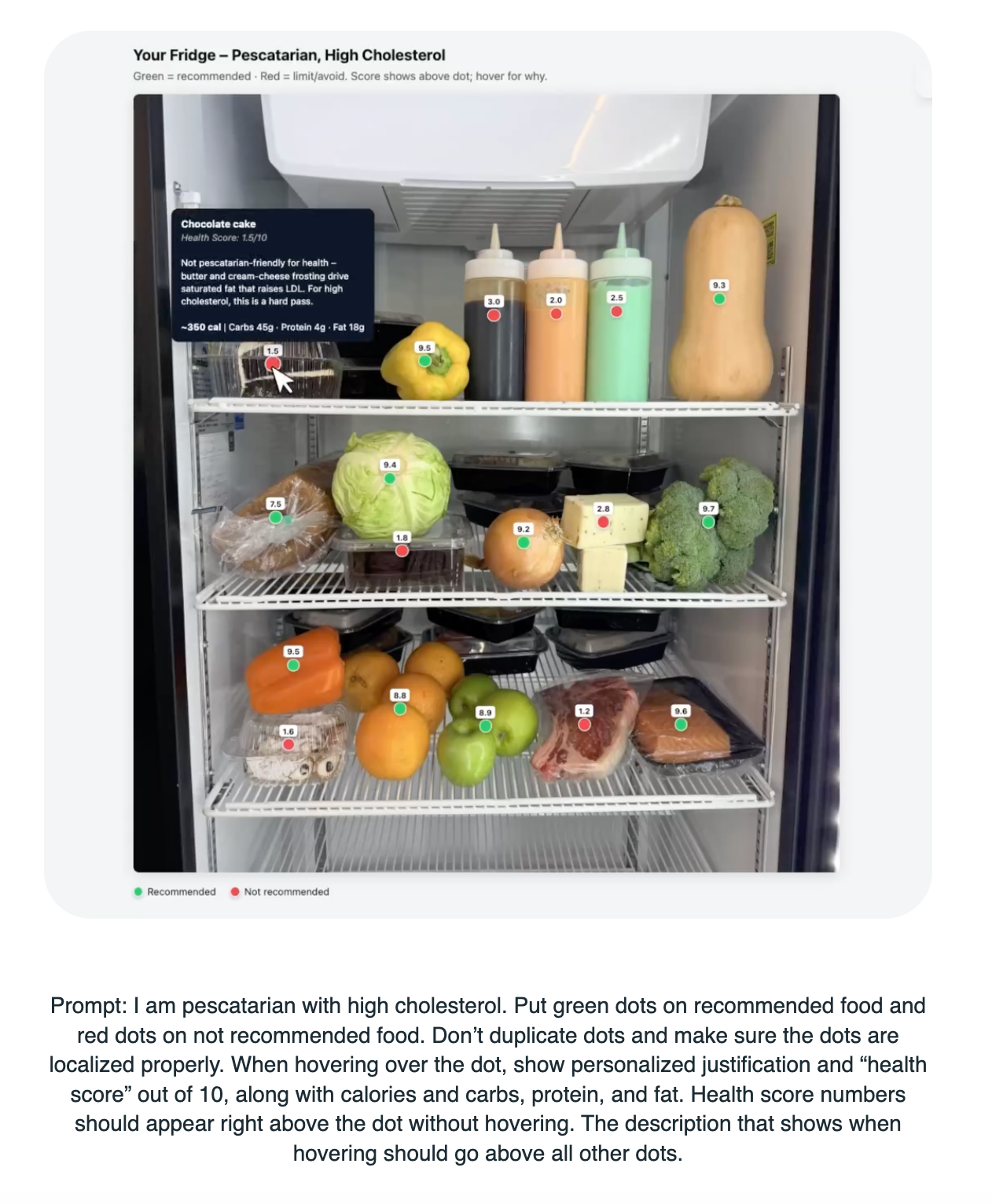
Alongside Muse Spark, Meta has developed an AI Business Assistant embedded directly in the ads interface. This investment is happening at the same time as a 10% workforce reduction and a significant pullback on Metaverse spending. The message from Meta is clear: AI is where the resource is going, and the way media buying and ad placements work on the platform will increasingly reflect that.
Meta Now Lets AI Tools Connect to Your Ad Account
Meta has launched AI Connectors, which allow tools like Claude and ChatGPT to connect directly to Meta Ads accounts via MCP (a protocol that lets AI assistants communicate with external platforms). Supported tasks include reporting, campaign management, and catalogue creation, though the feature is currently in open beta with limited creative visibility.
That said, we'd urge caution before getting excited. When a tool can edit and create campaigns, ad sets, and ads inside your account, the security implications matter. Meta was also previously handing out account suspensions because of Claude exceeding the number of allowed API calls. We're working through those before we'd ever recommend connecting anything.Watch this space.
One-click CAPI setup: what it is and what to watch
Meta is rolling out a simplified Conversions API (CAPI) setup inside Events Manager. No developer required, no server configuration. There's also an AI-powered update to the Meta Pixel that automatically enriches events with product data.
Both updates are opt-out rather than opt-in, activating automatically within 30 days unless you disable them.
For most accounts, better event match quality is a positive, and should improve attribution accuracy over time. The watch-out is that automated configurations don't always handle complex purchase funnels cleanly, and any mismatch between the setup and your actual customer journey can affect how spend is allocated. We'll be across this as it lands in accounts.
Meta's Pixel Is Getting Smarter Through AI: Here's What's Changing
From 4 June, Meta will automatically start pulling richer data from your website into its pixel, including product details, pricing, and page content. The aim is to improve how your ads are delivered and keep your product catalogue more accurate and up to date.
Meta has confirmed there's no disruption to your current ads or targeting, so right now, no action is required. The main watch-out is pricing data: if there's a conflict between what the pixel pulls and your existing product feed, it could create inconsistencies. We'll be reviewing accounts and keeping a close eye ahead of the rollout and monitoring the changes once they're live on 4 June.
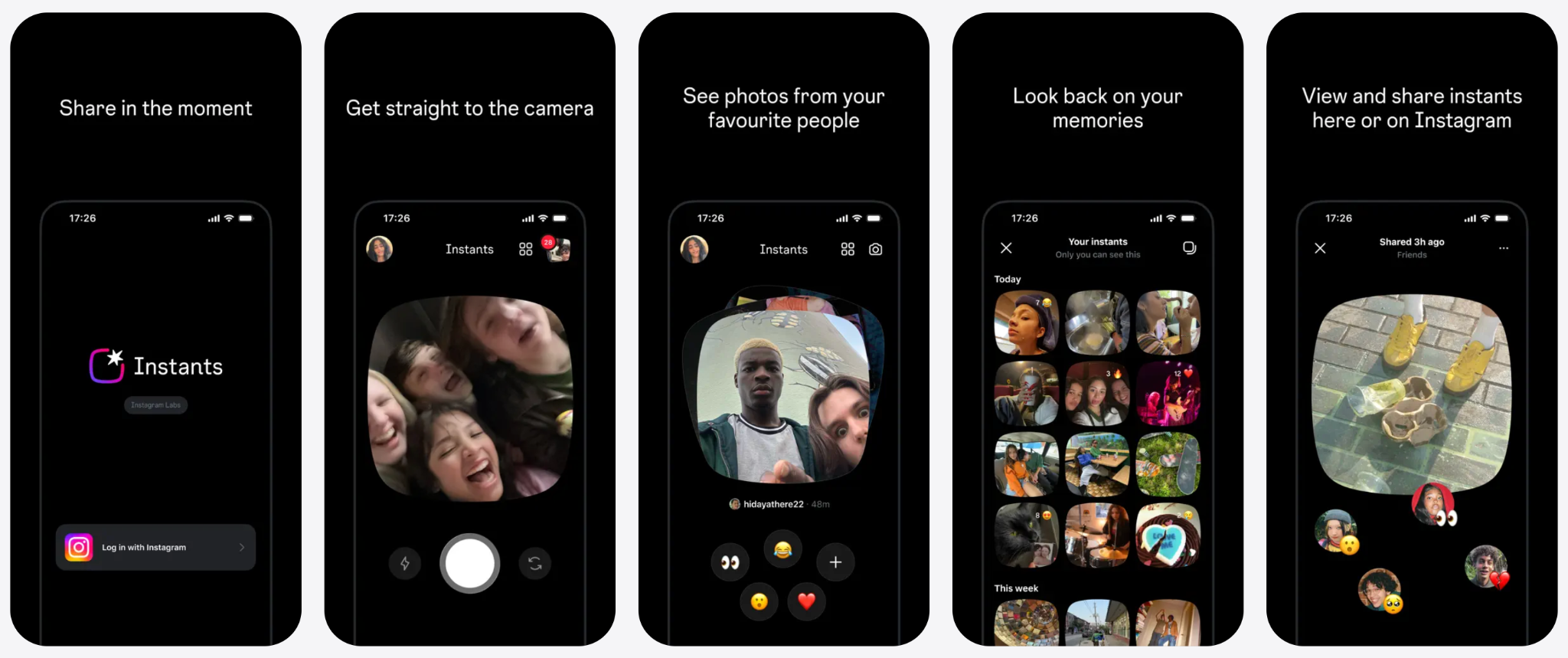
Meta Instants: a new disappearing photo app
You might remember Instagram Stories and what it did to Snapchat's growth trajectory. Meta appears to be running the same play again.
Instants is a standalone disappearing photo app, currently in testing in Spain and Italy. The timing is pointed: Snap recently reported losing 3 million daily active users in Q4 versus Q3 (mainly in the US), and has just cut 16% of its workforce. Meta, despite being in the middle of an AI acquisition push, is clearly keeping an eye on disaffected Snap audiences.
If the test performs well, a global rollout is likely. For advertisers, that means a potential new placement to factor in, particularly for brands targeting demographics who are already moving across platforms.
Meta Forum: a bet on Reddit’s territory
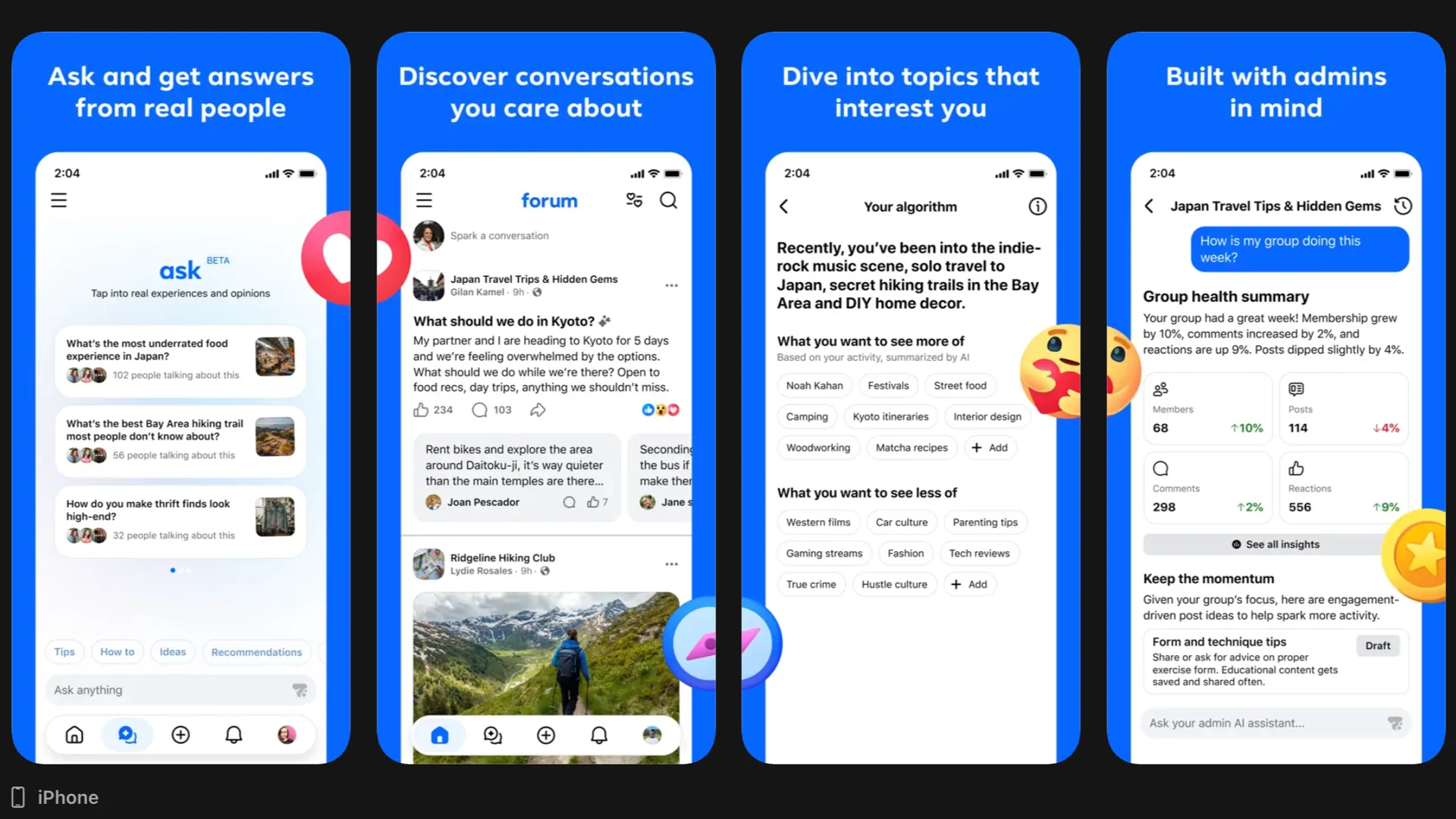
No formal launch in sight, Meta has quietly dropped a new app called Forum onto the iOS App Store.
Forum is built around Facebook Groups, but presented in a more Reddit-like format. You get a feed from groups you’ve already joined, the ability to discover new ones, and crucially, the option to post under a nickname rather than your real name. It’s a meaningful shift for a platform that has always tied identity to activity.
There’s also an AI-powered Ask tab that surfaces answers from real people across Facebook Groups, rather than generating a response from scratch. For group admins, Meta has added an AI assistant to help with moderation and community management.
For advertisers, it’s one to keep an eye on. Meta has been clear this is a public test, and availability varies by region. But if Forum gains traction, it opens up a new context for community-led discovery. The kind of intent-rich, interest-based environment that tends to be very good for certain categories of ecommerce brands.
Our read on all of this
Meta is consolidating. Less metaverse, more AI, more ad infrastructure, and more bets on where social attention is heading next.
We'll be watching how these roll out closely, and we'll keep you posted.
Want to talk through how any of these updates affect your paid social setup? Get in touch with the team.

