

Black Friday 2026: Why This Week Could Be Your Most Profitable of Peak
With Black Friday just days away, the plan is set. What matters now is spotting what’s changing in your channels and catching the small issues that can cost you over the busiest weekend of the year.
So we asked our heads of paid search, paid social, and affiliates what they’re seeing in their accounts right now. Where the costs are heading, which partners and platform changes deserve your attention, and the checks worth running before the weekend.
(PSA - if you want the wider economic picture first, start here)
Paid Search
Every year since 2020, peak has felt different. But what actually happens in paid search stays remarkably consistent.
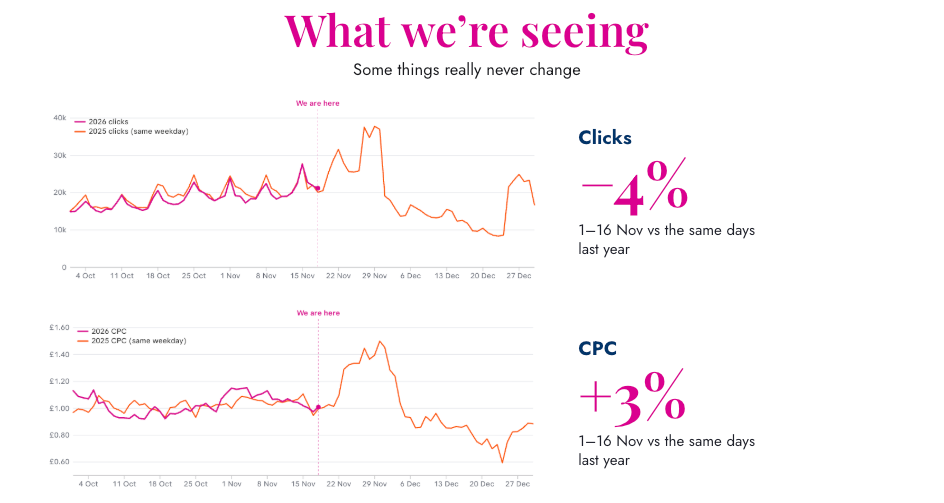
Looking across our Google Ads accounts (Search and PMax), traffic and spend are tracking almost like for like with last year, sitting just 4% behind so far this month. There’ll be variation between accounts and industries, but the pattern is familiar.
Expect the main peak on Black Friday, a dip on Saturday, then a climb through Sunday into Cyber Monday. Google has also predicted a stronger Cyber Monday because of payday, so make sure your budget stretches to that last year.
CPCs are up 3% on last year, slightly higher early in the month because so many retailers went on sale sooner. If you’re already live, now is the time to take advantage. CPCs this week are significantly lower than they’ll be next week, which makes it the most profitable window you’ll get.
Cheaper traffic through Demand Gen
With CPCs rising every year, our team has been doing more with Demand Gen.
Google has added plenty of features to the platform, and we’ve been benchmarking performance against our Meta activity on metrics like CTR, CPMs, ROAS and conversion rate. Volume still lags behind, but by focusing on static images and lookalike audiences, we’ve been driving qualified traffic at a much cheaper cost per click.
That will pay off next week. Shoppers are comparing and browsing right now, and our data shows a big chunk of Black Friday weekend sales come from clicks earlier in November.

What to focus on right now
Stick to the plan. Whatever’s happening in the wider world, lean on what previous years have taught you. Then check the details that make or break the weekend.
- Budgets and pacing. Set clear budgets with daily and weekly pacing against actuals. Automation helps, but you need strategic brains reading the data and reacting fast if things change.
- Seasonality adjustments. Use these to bring spend down on the post-Black Friday Saturday, where margin tends to dip, without affecting the rest of the period.
- Feed freshness. Merchant Center only crawls your feed once a day. Scripts can fetch it hourly, which is essential for large retailers with changing prices.
- Promotions. If you’re running a discount at checkout, get your Merchant Center promotion applied and approved in time. If you’re using strike-through pricing, make sure your ‘was’ and ‘now’ prices are mapped correctly in the feed.
It might sound basic, but there’s so much at stake every hour over Black Friday weekend that none of it can be left to chance.
One last note: Google has started gradually rolling out ads in AI Mode in the UK. If you spot them appearing during peak, that’s why. We’ll be watching closely and will have more to say once peak is over, especially around feeds.
Paid Social
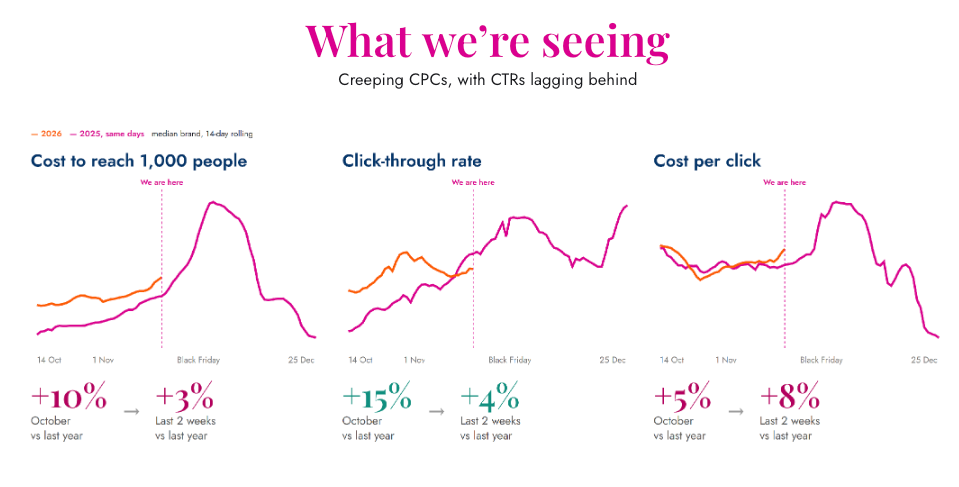
Let's start with the core KPIs. CPMs are higher, just as they were a month ago. CPCs are now trending up too, because click-through rates haven’t spiked the way they did this time last year. Hopefully that engagement arrives over the next couple of weeks.
Who’s live, and with what
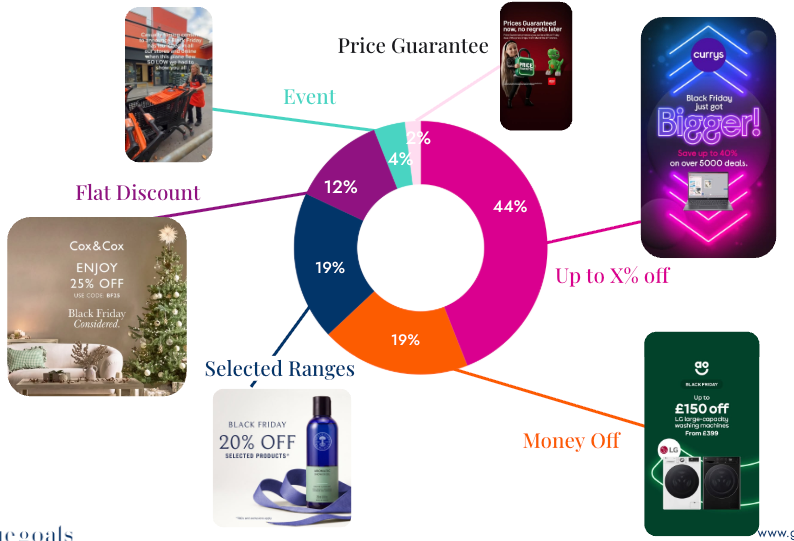
Across a sample of 121 brands advertising on Meta, the share with Black Friday activity live has been creeping up all month, reaching around 44%.
Break that down by category and the gap is clear. Big retailers lead with just over 65% live, while fashion and footwear sits at around 25%. That’s the challenge for many brands at peak: the big retailers can afford to go early, they’re price competitive, and they often stock the very categories that are holding back.
On the creative side, there’s not much that’s genuinely new. “Up to X% off” is the most common offer, followed by money-off and flat discount offers from brands like Neal’s Yard Remedies and Cox & Cox, plus some brands simply labelling their content as a Black Friday event.
What feels is missing is UGC. It’s very banner-heavy right now, which is an opportunity if you want to stand out.
Two platform changes to watch
Meta has introduced a notification promising a “better browsing experience.” In practice, it means catalogues are being auto-applied to a lot of ads, and the product sets don’t always match the ad they’re attached to. We’re working with our Meta reps to opt all our clients out.
Placements can also now be selected at ad level rather than ad set level, which makes manual setup more cumbersome. Both are worth keeping an eye on through Q4.
Affiliates
Comparing this year with last, we’ve seen one big shift in the affiliate channel: demand isn’t piling into one week anymore. Shoppers are looking for offers earlier and shopping around across the whole of November.
Several partner types are standing out in the lead-up.
CSS partners are where we’re seeing the biggest impact, just like last year. For one of our clients, they bring in around 45% of all traffic, and revenue growth is roughly in line with the 30% shown in Awin’s Peak Performance Tracker. This is probably the biggest opportunity going into Black Friday week.
Closed platforms like Blue Light Card have millions of members, so even small growth can mean a big return. One client saw a 12% revenue uplift comparing Q4 last year with 2026, and we expect that to build over peak.
Cashback partners remain some of the most consistent performers and are tracking in line with last year. With Fake Friday and Black Friday still ahead, that’s when we expect them to step up.
Loyalty partners are delivering strong year-on-year results, especially where we’ve offered increased loyalty points. One partner has driven a 55% uplift in Q4 revenue, a sign the strategy is working before Black Friday has properly started.
Gift platforms are picking up as people turn to Christmas shopping. Smaller ones tend to be seasonal, but bigger names can drive revenue year round if you’re working in the US. One of our larger US gift partners is up 983% year on year in Q4, which shows how much the right partner can deliver.
Key takeaways
- If you’re live, make the most of cheaper CPCs this week. Clicks now become sales next week.
- Check your feeds, promotions and pacing before the weekend, not during it.
- Use seasonality adjustments to protect margin on the post-Black Friday Saturday.
- Opt out of Meta’s auto-applied catalogues, and consider UGC to stand out from the banners.
- Lean on CSS, loyalty and closed platform partners, where growth is strongest right now.
Most importantly, stick to the plan. You’ve done the preparation, and the data says this year will look a lot like the last.

