

Good Enough isn't Good Enough in Q4: Our Peak Performance Recap
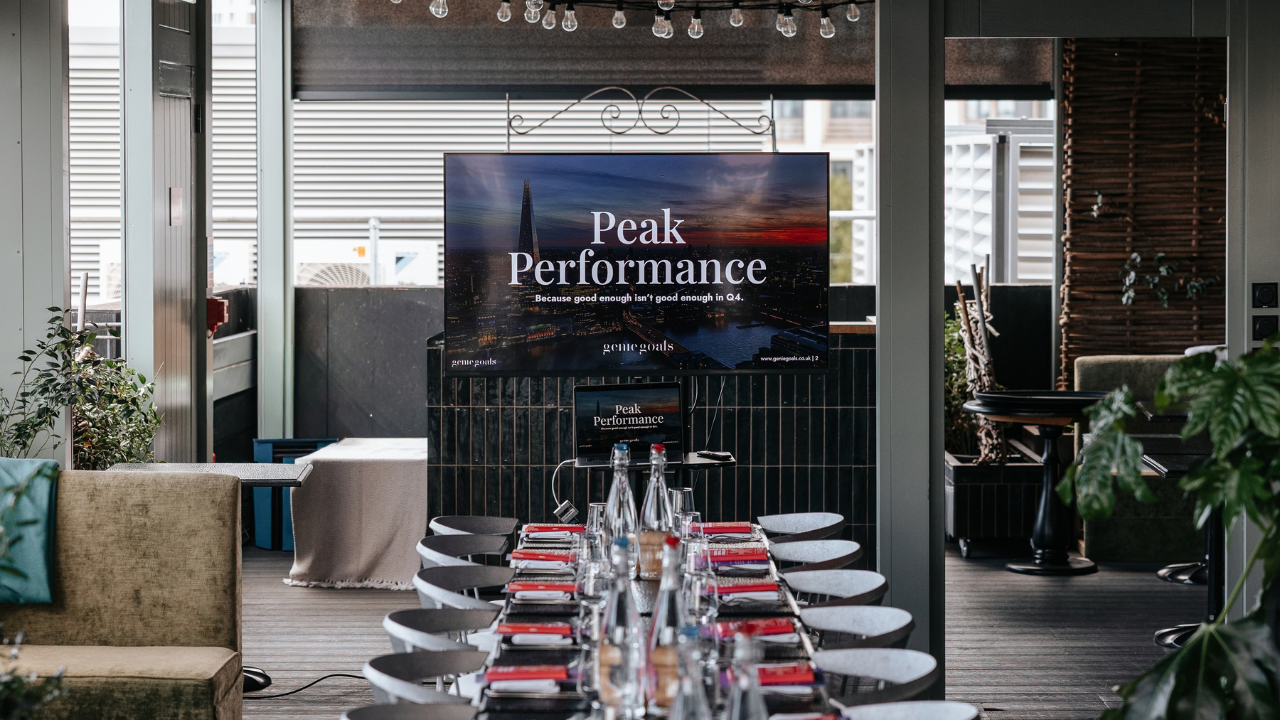
It’s been a busy week over at Genie HQ. Amongst the day-to-day goings on, we’ve hosted not one, but two events for our clients and friends, marking the start of our Peak Performance series with a bang.
Thursday was our first event, an in-person roundtable lunch held at The Conduit in London - our annual pre-peak lunch, bringing together ecommerce leaders for an afternoon of expert talks, exclusive industry insights, and honest conversations about what’s actually coming this season.
Then just a few days later, we hosted our first webinar in the series, Peak Performance: Basecamp. An opportunity for those who couldn’t join us in person to hear about what’s happening in the market, how competitors are positioning, how customer behaviour is shifting. And how - in amongst all that - brands can use the intel to build with confidence.
If you couldn’t make it to either event, never fear! We’ve written up our top takeaways so you can have a quick read over your morning coffee and still feel like you’ve got that extra edge to help make this Q4 your best one yet.
Peak is starting earlier, and it's not really "peak" anymore.
Promo calendars have been creeping earlier for years, and the data backs it up. Offers now start climbing weeks before Black Friday itself, with the number of live deals on the first working day of November rising year after year.
In 2025, Fake Friday (the Friday a week before Black Friday) well and truly rivalled the main event in search ad clicks. And on the day of Black Friday itself, there were no deals left that were actually at their cheapest point of the year. 83% of products tracked were cheaper or the same price outside the official sales window.
Peak isn't a single day anymore. It's a marathon that increasingly starts in October and runs through to Christmas. If your activity still switches on in November, you're starting the race from behind.
Deeper discounts aren't what's converting shoppers. Trust is.
Consumers are building their shopping lists throughout the year and through what they see online. Notably, across social platforms, where they can search, browse, and get real opinions from other shoppers before they ever land on a brand’s own site. That’s less a discovery channel now and more a conversion moment in its own right.
They’re becoming numb to discounts and are - more than ever - turning to the brands that they have a sense of loyalty to. Peak used to be won by the sharpest offer, but increasingly it’s won by whoever earned a place in the shopper’s mind months before November.
It’s not a reason to abandon what already works; it’s a reason that brands must be sure their always-on presence is working hard throughout the year. Testing early across platforms allows brands to reveal what builds towards a purchase. Getting into the consumers’ mind well before they’re ready to buy is what will give brands the edge in Q4 2026.
AI is changing discovery, and the brands showing up now will have the edge.
LLM usage for shopping research has doubled in two years, from 31% to 54%. Shoppers are using AI tools to research, compare, and shortlist products before they ever reach a search engine or a brand’s own site.
Traditional search was built on keywords: "patio furniture," "mens shoes for marathon." Predictive search is conversational: "I have a small patio, what kind of table would you recommend?" And the knock-on effect is stark. Organic search CTR drops by 58% when an AI overview appears, and 83% of those searches end without a click at all. But brands that do get cited inside an AI overview see 91% more clicks on their paid ads, and 35% more on organic.
The takeaway from Jérémy, our Head of Paid Search: getting your feed fundamentals right now will give you the edge to appear where your consumers are. Rich titles (product, size, material, colour, brand), descriptions over 500 characters, and shipping signals all feed the platforms that are increasingly answering questions before your website gets a look in.
Creative and channel diversification is no longer optional.
Sam, our Head of Paid Social, walked through where budgets are actually moving. Meta still dominates spend, but Reddit, Pinterest, Snapchat and TikTok are all taking a growing share, and cost predictions suggest that gap will only widen next year.
Ad volume is climbing too, but spend is concentrating around fewer, stronger creatives. Peak is exactly the moment that creative diversity is hardest to hold onto - everything becomes offer-led, timelines compress, and the easy instinct is to produce one strong style of content and push it everywhere.
Sam's advice for cutting through: don't just change the offer in your ads. Change the angle. Brand, product, customer, or cultural moment. Then multiply that angle across funnel intent, visual format, and ad format to get genuine variety, not ten versions of the same idea. The brands that win this year will be putting more logic behind their content strategy, finding ways to deliver diversified assets through largely one message.
Where this leaves you
The landscape has shifted more in the past year than in the several before it combined. Peak is longer, discounting alone isn't a strategy, and AI is quietly becoming a new front door to your brand.
None of that needs to be daunting. It just means the brands doing the groundwork now, on trust, on feed data, on creative variety, are the ones who'll be ready when it counts.
Want to talk through your peak strategy? Our doors are always open and we’d love to hear from you. Get in touch and lets make this your best Q4 yet.

