

Is it too late to get ahead for BFCM 2026? Where ecommerce brands should focus in these final few weeks

Black Friday seems to be spreading out more and more each year, which means that the work you do in October matters more than it ever has before. Offers are starting earlier and shoppers are taking their time, so peak now feels more like a long climb than a single spike on the last Friday of November.
You’re likely to be glued to your desks right about now, fine-tuning those strategies that have been signed, sealed, and (almost) delivered. But there are still plenty of smart moves you can make over the next few weeks, and we’ve got you covered.
To help you keep on top of the ways you can fine-tune your strategy as we edge ever-closer to the BFCM weekend, we’ve pulled together this useful guide from what we’re seeing across the market, to help you make sure this peak season is your best one yet.
There’s a bit more room for optimism this year
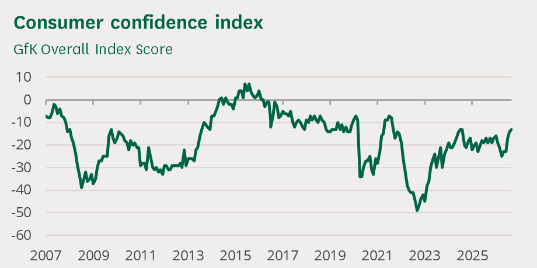
To work out where to focus, it helps to start with how shoppers are feeling. And for once, the picture is pretty encouraging. The GfK Consumer Confidence Index rose to -13, still negative territory but 6 points up on last year and an 18-month high. The Budget also lands about a month earlier than last year, when it fell right on top of Black Friday and held spending back. Although 68% of shoppers state they are actively worried about how the Budget will hit their personal finances, the rise in Consumer Confidence points optimistically for 2026.
That confidence isn’t turning into instant sales, though. Across our clients, traffic is up on last year but conversion rate has dipped, as shoppers browse and now wait for the deals they know are coming.
Revenue is holding steady anyway, helped by a rise in AOV as brands nudge prices up to protect profitability. IMRG’s data shows the same resilience, with online revenue up 0.5% in September.
What we’re unsurprised to see is that there are plenty of brands who aren’t just waiting for November. Lookfantastic, Boots and John Lewis are all running offers now - although keeping them well away from Black Friday messaging.
We expect to continue to see the biggest retailers go early and go big again, while others hold back on discounts to protect their margins. Either way, peak looks set to be much less ‘peaky’ this year.
Paid Search: why today’s cheap clicks become November’s sales
Google’s 2026 forecasts closely mirror last year, so if you’ve planned peak before, there shouldn’t be too many surprises. The one date to circle is Cyber Sunday, where Google expects a big jump in demand as shoppers wait to see if a final discount is coming.
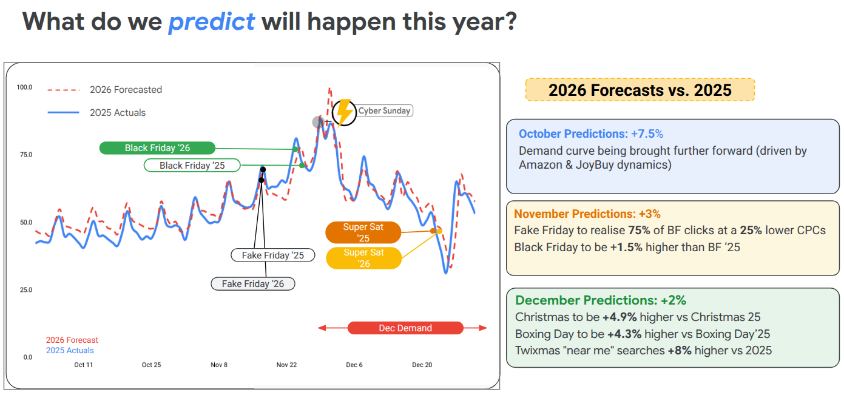
Until then, if October looks quieter than you’d like, hold your nerve. Data from our CSS partner and sister company, Genie Shopping, shows people are browsing and comparing now, and those clicks turn into purchases in November.
You’re also paying far less for them today. So it’s worth asking whether your targets are holding you back, as relaxing them slightly could bring in more of your future November customers. Agree a contingency budget now, too. If performance takes off, you’ll want to push straight away, rather than having to wait for sign-offs from the finance team.
Then get your foundations right - a key theme we’ve continued to talk about all year round. Not sexy, but definitely important. Your feed powers Shopping and the AI-driven placements sending more traffic to sites, like Gemini, AI Overviews and AI Mode, so check your shipping, returns and titles and fix any disapprovals in Merchant Center.
And a quick word on ChatGPT ads - if you haven’t started yet, save them for post-peak. Don’t get bogged down with something new this close to crunch time. They’ll serve you better when you’ve been able to test and trial in a quieter season.
None of this is the most glamorous to-do list. But it means that when November arrives, your account is ready to turn all that early browsing into sales, rather than scrambling to fix things mid-peak.
Paid Social: getting in early before costs climb
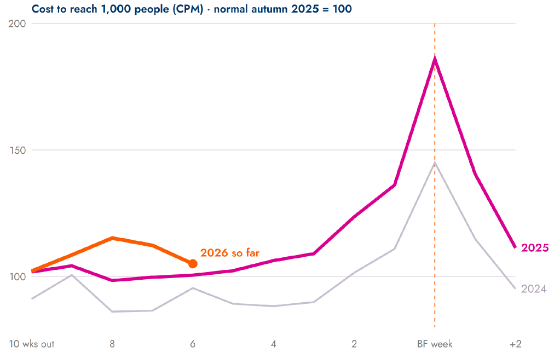
Spending early matters even more on Meta, where CPMs and CPCs are already pacing higher than in any of the last 3 years. That makes now the time to build demand. Meta lead gen ads are more popular than ever this year, but they’re only worth running if you can judge lead quality, so sync Klaviyo and track how many of those leads buy on Black Friday.
Late October is a brilliant window for this. Last year, the week commencing 27th October delivered a CPA around 19% lower, largely thanks to cheaper CPMs. Plus, it’s the last payday before Black Friday.
Once your offer goes live, focus on protecting what’s working. Give your Black Friday creative its own ad sets so the whole account doesn’t go back into learning, keep evergreen assets running and keep budget changes under 40%.
Release content in phases, too. Meta puts most of its budget behind your top four assets, so drip-feeding new creative keeps you competitive for longer.
Now is also not the time to be reinventing your creative. Adding Black Friday messaging to this year’s top performers or reworking your best sale assets will often beat starting from scratch (and will save you a bunch of time in an already-overloaded schedule!). And if your offer isn’t changing on site, skip separate Cyber Monday creative and stick with what’s selling.
Put simply, your job on Meta is to warm people up early, then let your strongest creative do the heavy lifting once the offer lands. By that point, many shoppers will be doing their own research elsewhere, so let your creative do the talking.
Affiliates: staying visible while shoppers compare
Not every shopper finds you through an ad. Plenty will weigh up their options through publishers, comparison sites, and AI tools first. With LLMs changing how people shop, visibility in affiliates now comes in more forms than ever. So when budgets get tight, it’s tempting to cut awareness first. We’d really encourage you to protect it.
Last November, we ran a content piece for a client with Linkby at the start of the month, and it delivered £14 for every £1 spent. Good timing and a stunning product with a clear sale message made all the difference. And because content like that doesn’t disappear when the campaign ends, it keeps working for you long afterwards, including AI search.
Your CSS partners deserve some attention too, as they catch customers while they’re still weighing up their options. The more up to date your feed is, and the easier you make it for partners to spot your campaigns and bestsellers, the more visibility you’ll get. Unique GTINs make a real difference here. It’s also worth checking your rates are still competitive in your vertical, because that can lift your impression share during a very noisy period.
As shoppers get close to buying, keep an eye on what your competitors are doing at the bottom of the funnel. Look at the offers they’re running and how they’re talking about them.
Three things you can do this week
If there’s one thread running through all of this, it’s that preparation beats panic. A longer, flatter peak rewards brands that get the basics right early and then stay calm once the deals go live.
So if you only have time for a few things before November, make it these:
- Have the budget conversation now. Agree with your team how you’d fund a push if performance takes off, so you’re never stuck waiting for approval when the moment arrives.
- Do the ‘unsexy’ stuff. Your feed, your CSS partners, your account hygiene checks. Not the most exciting things in the world, but sorting them now means you won't be making technical changes when you’re up to your eyeballs in the sale period.
- Trust what’s already working. You’ve spent all year learning what your customers respond to, so put your strongest creative to work instead of starting from scratch.

